Cards Rumble
Simplifying a complex poker hybrid into a clearer, more accessible casual card experience.
Year :
2023-2025
Industry :
Mobile Gaming
Client :
Yakim Interactive
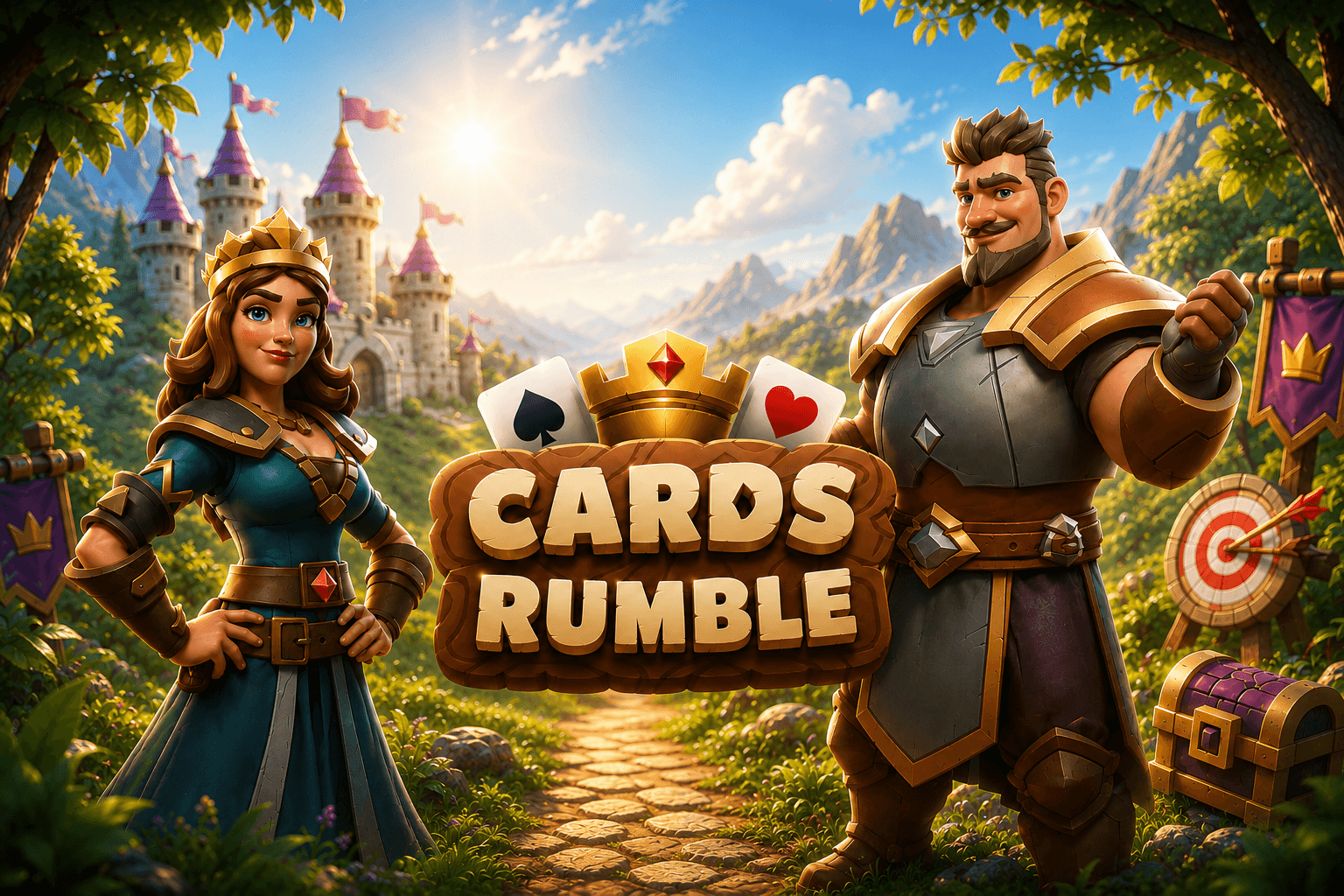
Cards Rumble (formerly developed under the working titles Loaded8s / Poker Wars) is a casual PvP card game designed to combine poker mechanics with fast-paced strategy. This project focused on a complete UX overhaul and visual rebranding to lower the barrier to entry for casual players while preserving depth for veteran gamers.
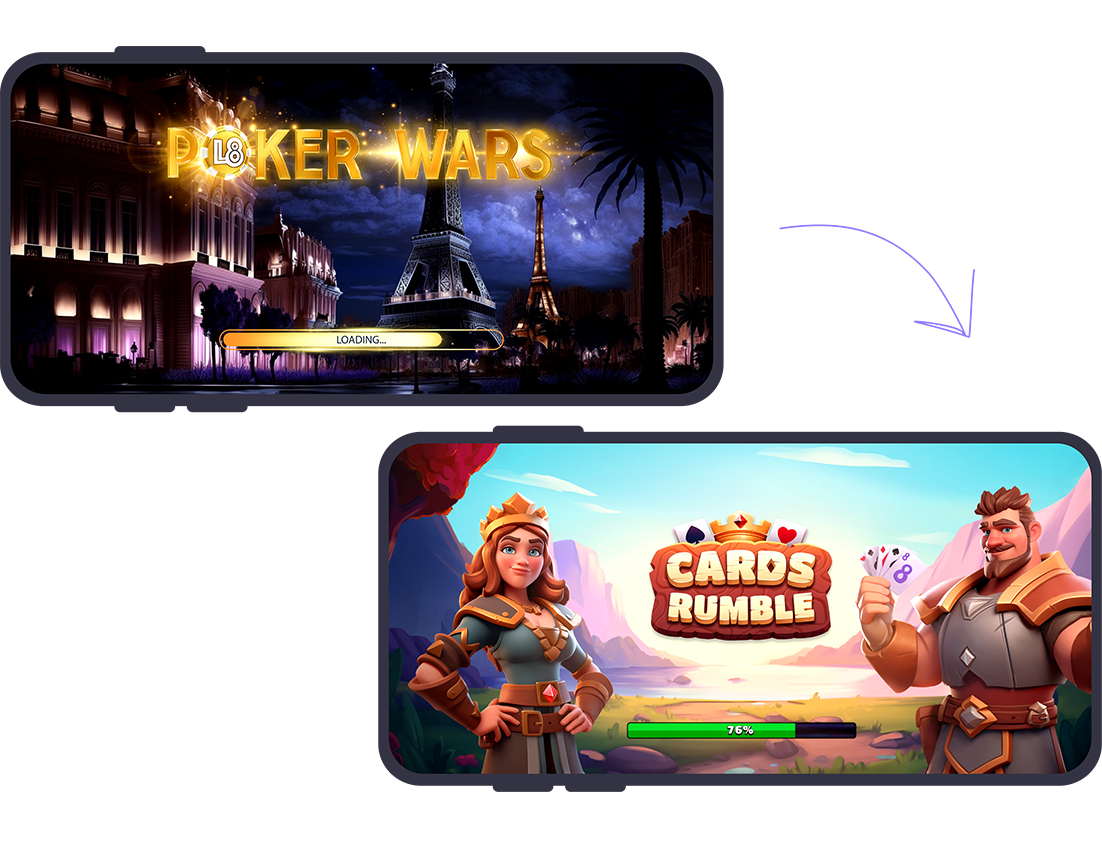
Project Role: Product Design Lead
- UX/UI Direction: Overhauled the global information architecture, simplified game loops, and restructured the onboarding flow in collaboration with Product Management.
- Creative & Art Direction: Partnered with the Art Director to define the new casual visual language and led the Concept Art team in executing the revamped thematic world.
The Challenge & Problem Statement
The legacy version of the game suffered from critical Day 1 retention drops, driven primarily by a high churn rate during the tutorial.
Findings
- Cognitive Overload: A cluttered home screen and chaotic poker table layout distracted users from core gameplay decisions.
- Onboarding Friction: The tutorial introduced complex betting rules too quickly, overwhelming casual players.
- Audience Mismatch: Traditional poker players found the casual hybrid mechanics redundant, while casual players were intimidated by the steep learning curve and dated, dull visual design.
The Solution: Simplifying & Rebranding
We addressed these core friction points through a structural UX redesign paired with a highly engaging visual narrative:
- Gamified Onboarding: Redesigned the tutorial to introduce core mechanics progressively, ensuring players experience their first "Win" within the first 60 seconds.
- Decluttered Core UI: Stripped away non-essential features from the main hub and game table to minimize cognitive load.
- Thematic Rebranding: The generic card table became a full-screen world. Inspired by top-tier casual titles (Brawl Stars, Royal Match), we added a narrative: players travel as heroes through different cosmic kingdoms.
Execution: Visual & Structural Transformation
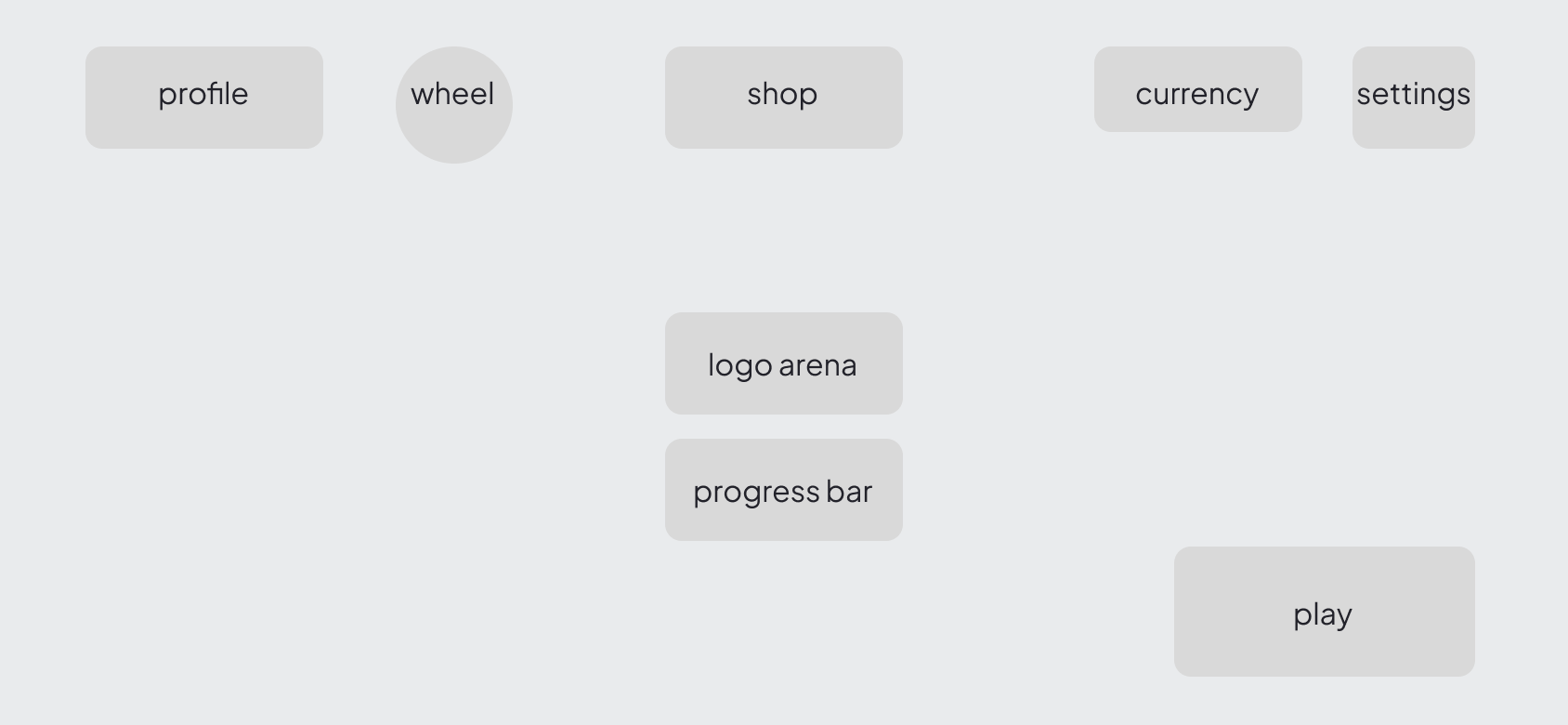
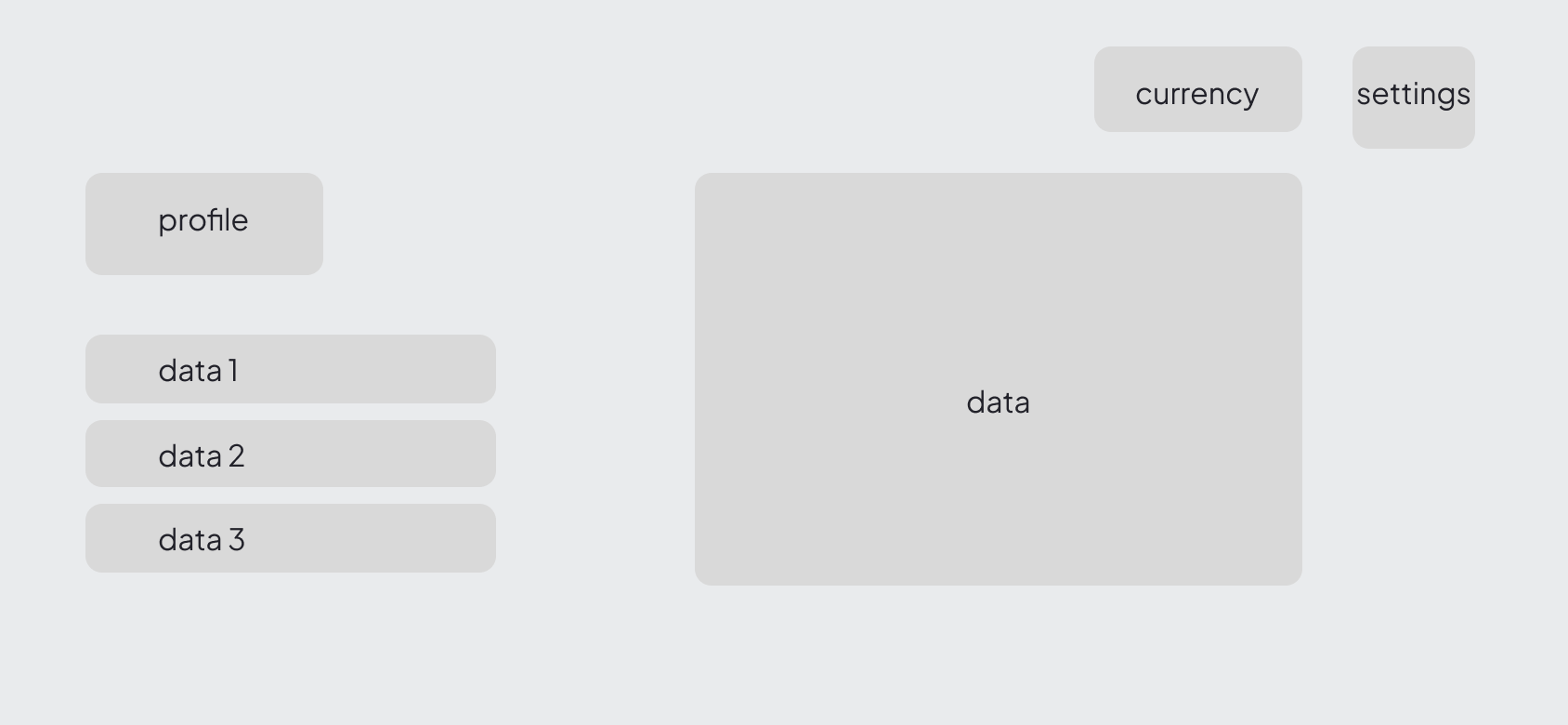
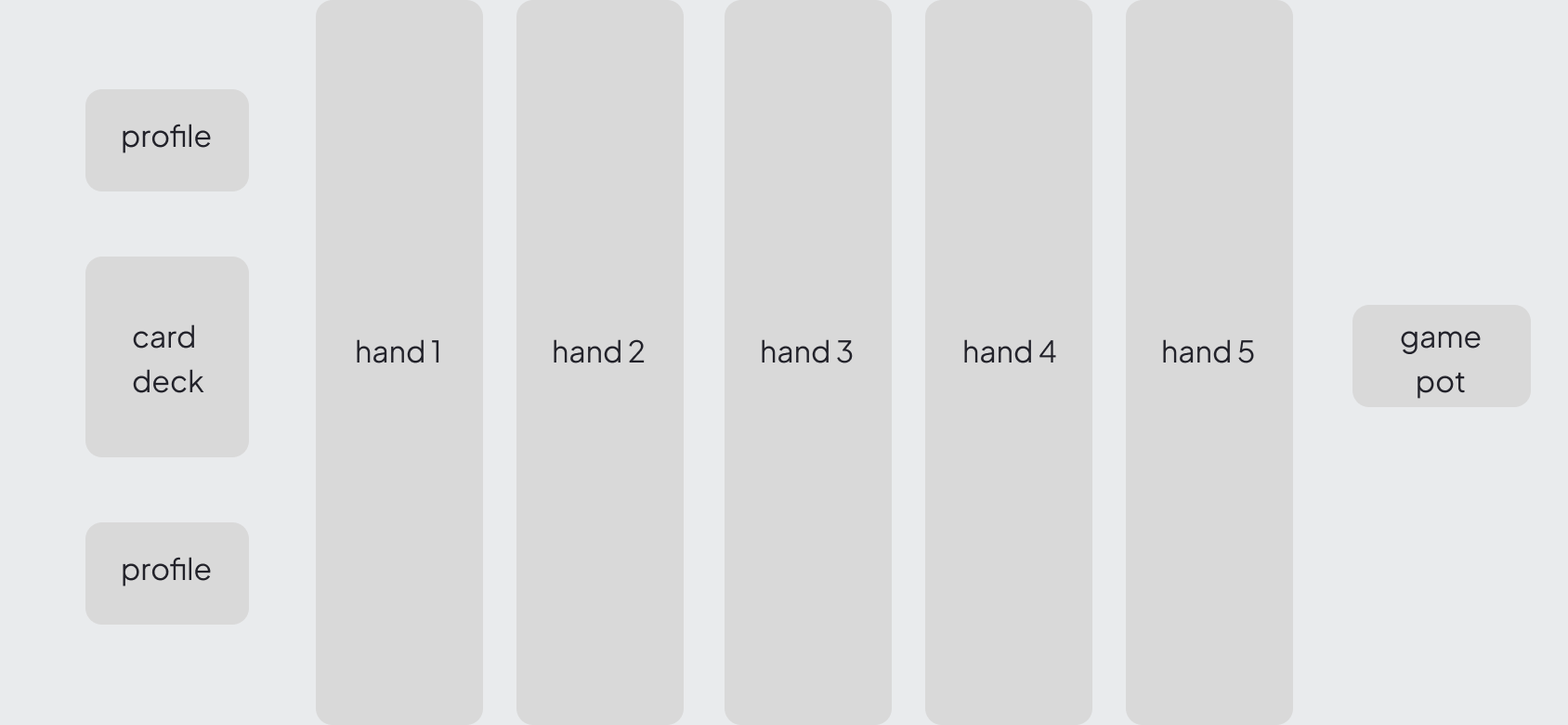
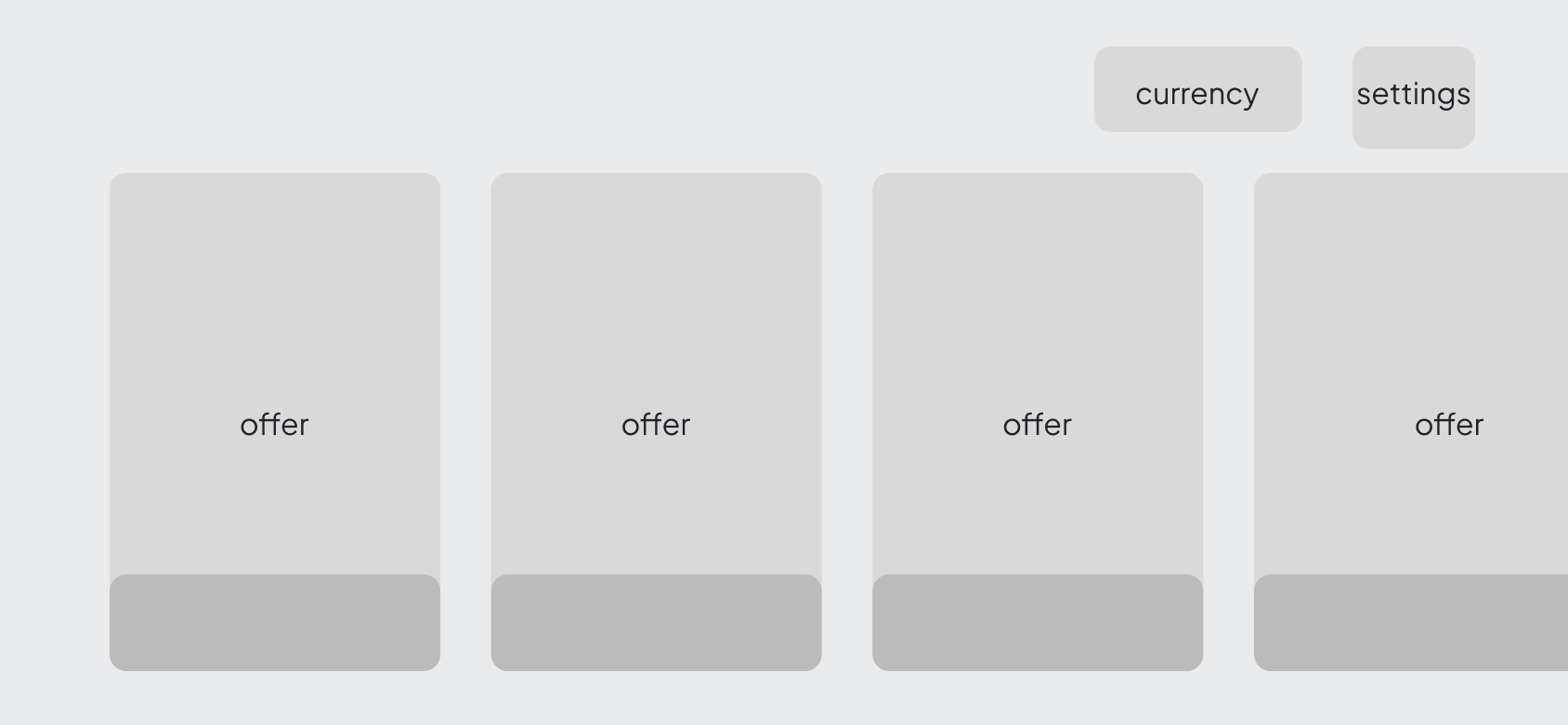
1. Information Architecture & Wireframes
The interface layout moved from restricted canvas modules to a full-screen layout that gives the visuals more room.
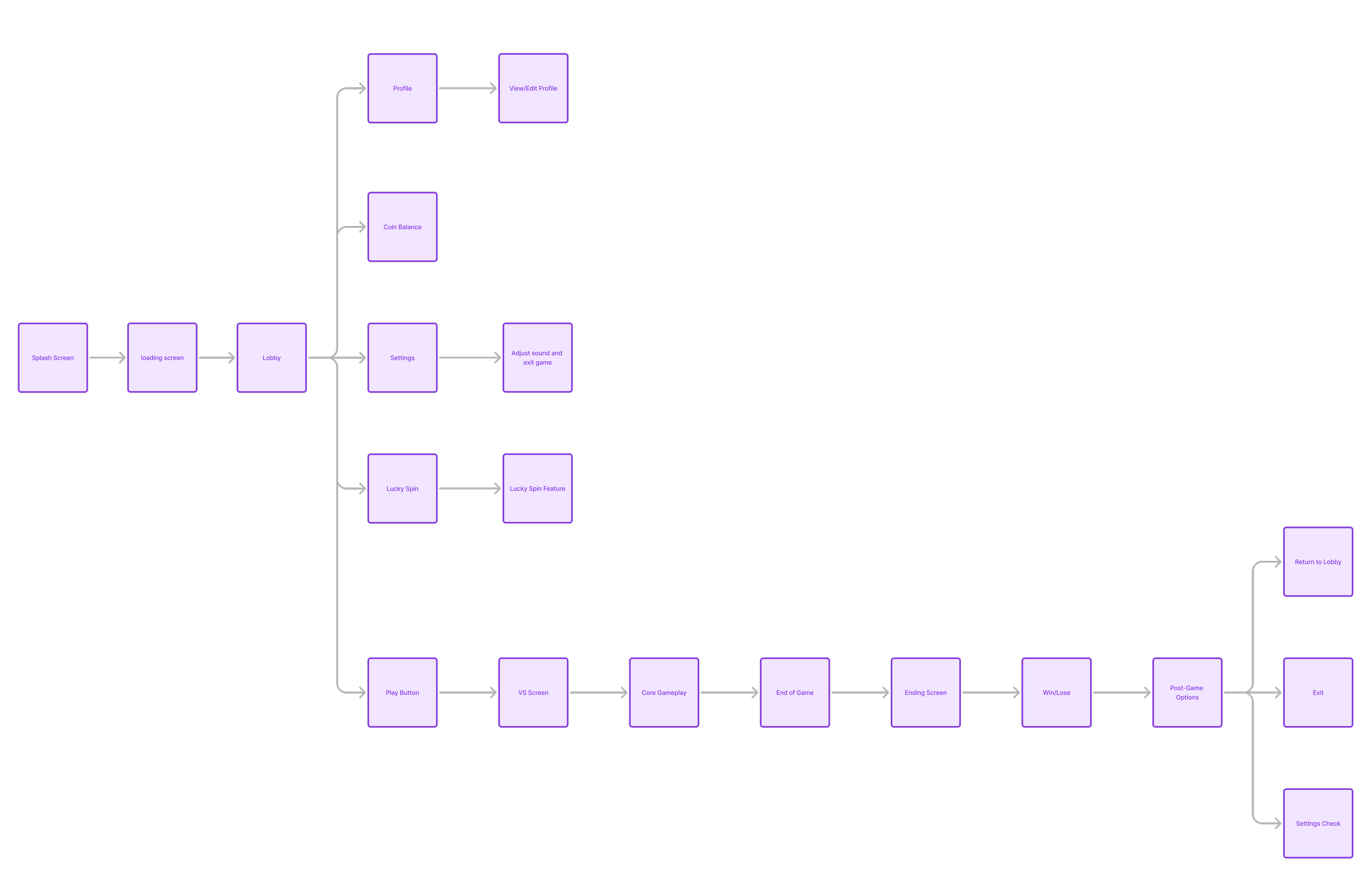
Low-Fidelity Wireframes
2. Moodboard & Visual References
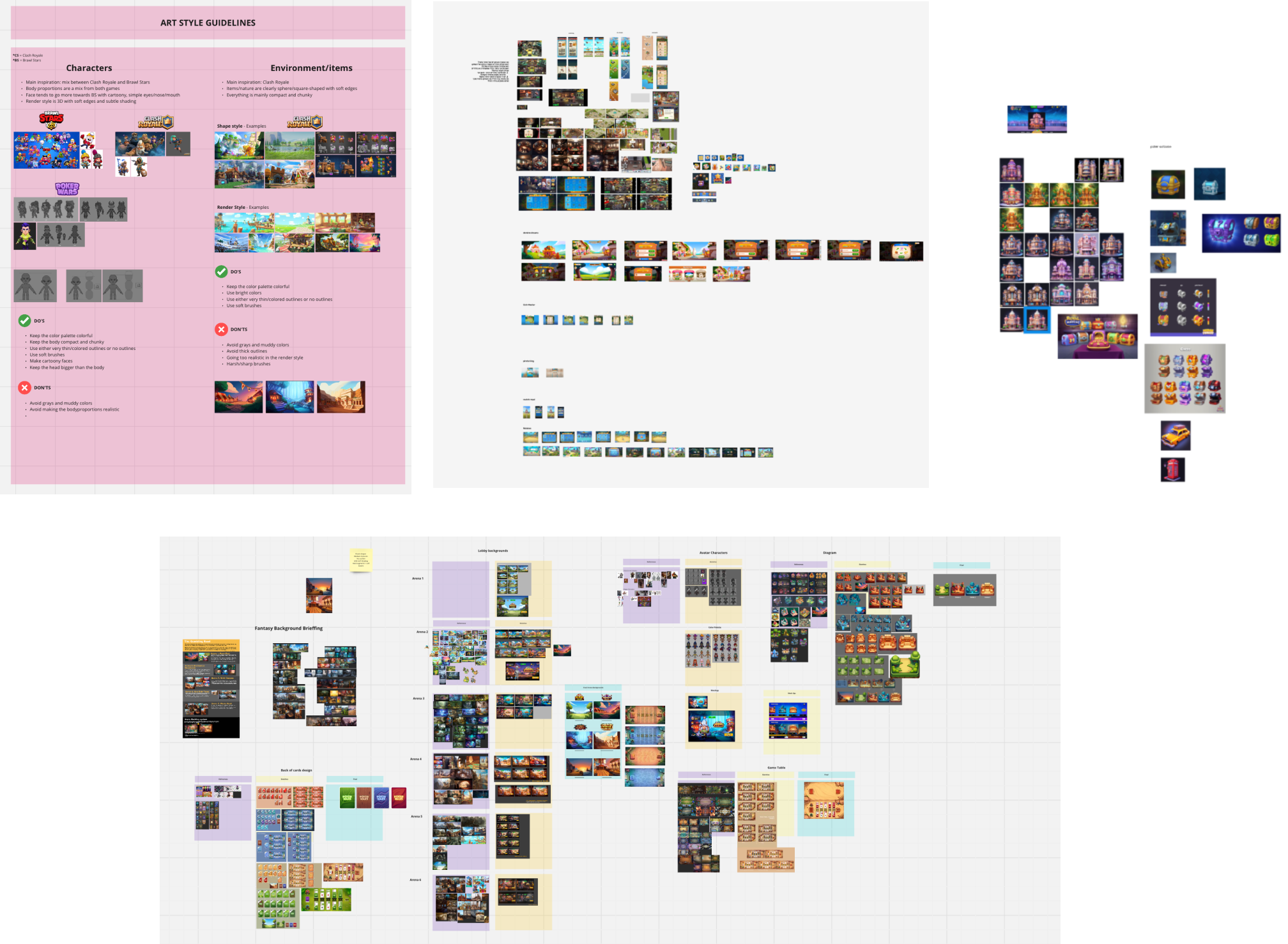
To shift the game from a hardcore poker aesthetic to an engaging, casual PvP experience, we anchored our visual direction in industry benchmarks like Brawl Stars, Clash Royale, and Royal Match.
- Vibrant Visual Language: Transitioned from dull, desaturated tones to high-contrast, bold color palettes to trigger excitement and enhance reward loops.
- Tactile UI Elements: Adopted chunky, rounded, and tactile UI components (buttons, badges, and frames) that feel satisfying to interact with on mobile screens.
- Casual Storytelling: I provided the art direction to establish a "hero journey" narrative, transforming the game environment into cosmic kingdoms. This wrapper increased emotional connection and lowered the perceived complexity of the card mechanics.
3. UI Evolution: Before vs. After
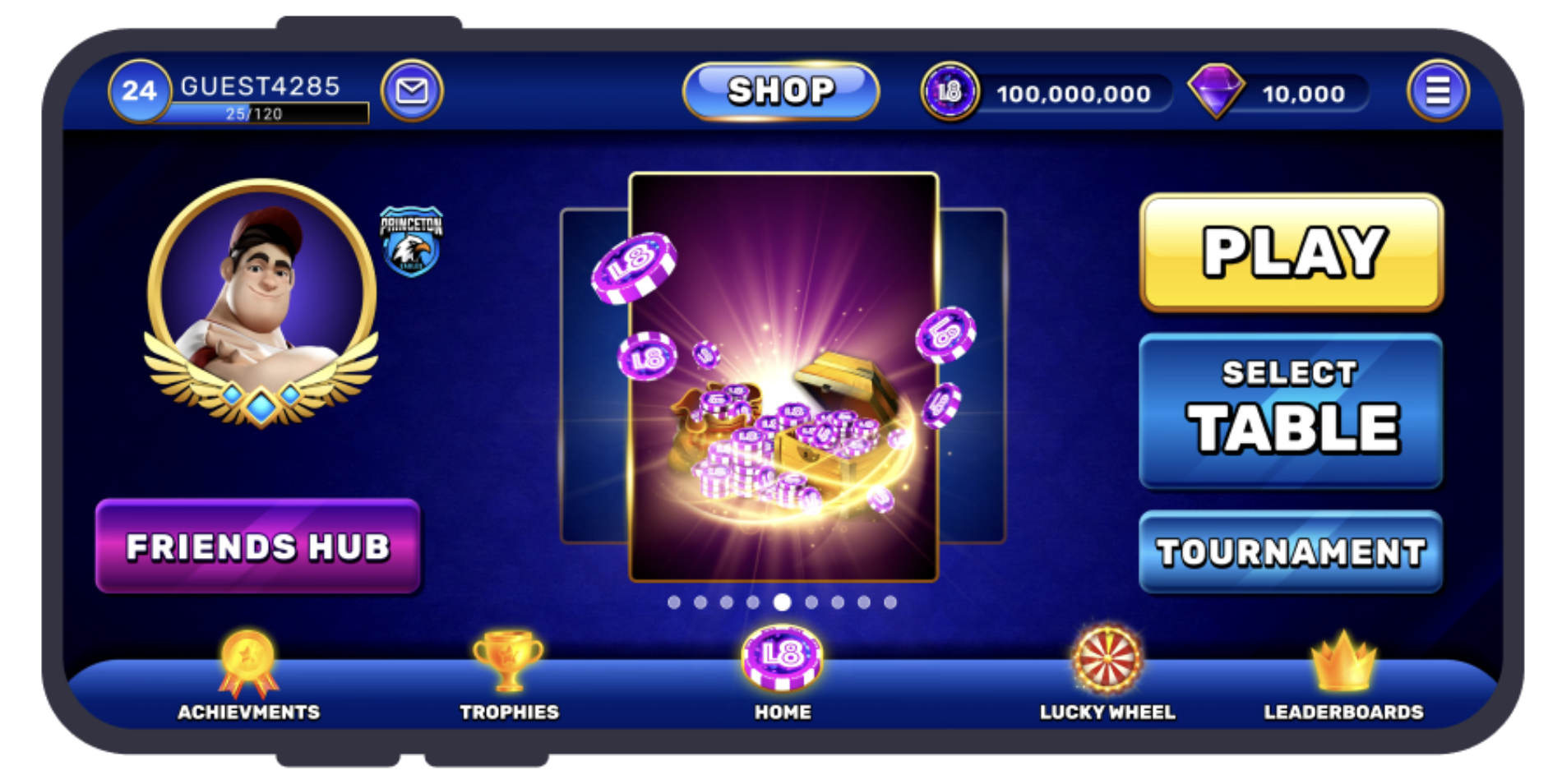
The interface was rebuilt from the ground up to establish a clear visual hierarchy and an approachable casual tone, moving into full-screen immersion and removing non-essential functionality.
Home Screen & Progression Hub
- The Challenge: The legacy home screen suffered from severe interface overload, cluttering the user's viewport with non-essential features, secondary navigation paths, and text-heavy modules that distracted from the core gameplay loop.
- The UX Transformation: Rebuilt the entire layout from the ground up using casual competitor benchmarks. We stripped away legacy clutter to isolate the primary player actions, reduced cognitive load, and moved the game to full-screen.
- The Visual Outcome: Replaced the rigid casino-style lobby with a progression layout. The interface now reflects the new cosmic kingdom narrative, with the core "Play" loop set in contextual arenas and clear milestone feedback.
 Old VersionNew Version
Core Gameplay Table
- The Challenge: The legacy table interface suffered from severe cognitive overload and complex betting mechanics that triggered immediate drop-offs among new users. The cramped layout, vertical card alignment, and clutter hindered player focus, while the hidden-hand rules and betting features made the onboarding process feel punishing rather than rewarding.
- The UX Overhaul: Rebuilt the gameplay environment to prioritize core strategic decisions and readability. We eliminated the betting features and hidden-hand mechanics to simplify the ruleset. By restructuring the information architecture, we increased grid spacing, repositioned key interaction and settings buttons for better accessibility, and deferred secondary functionalities to mitigate early-stage friction.
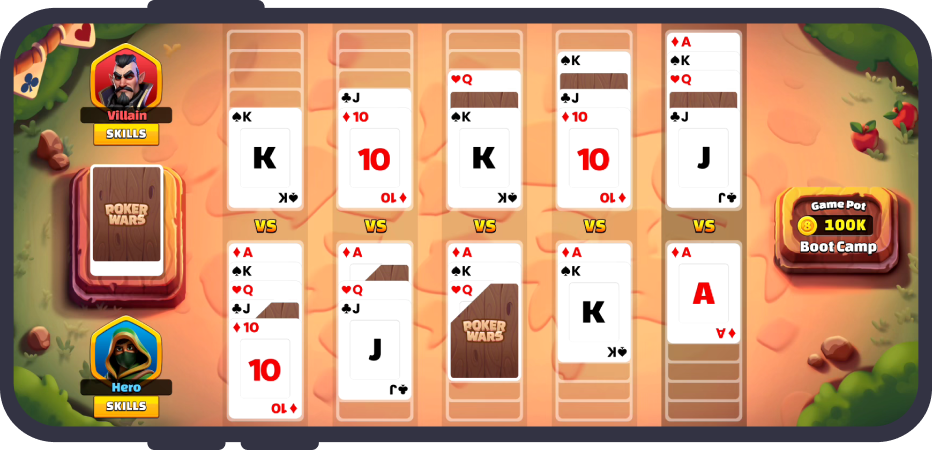
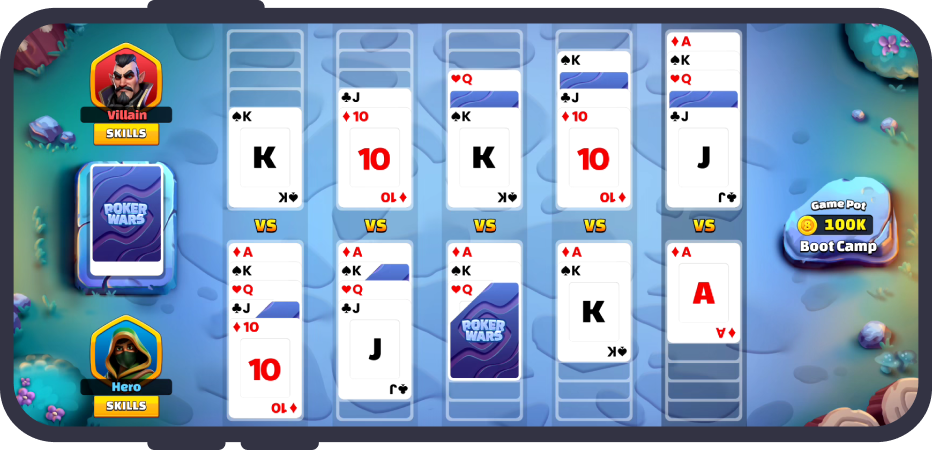
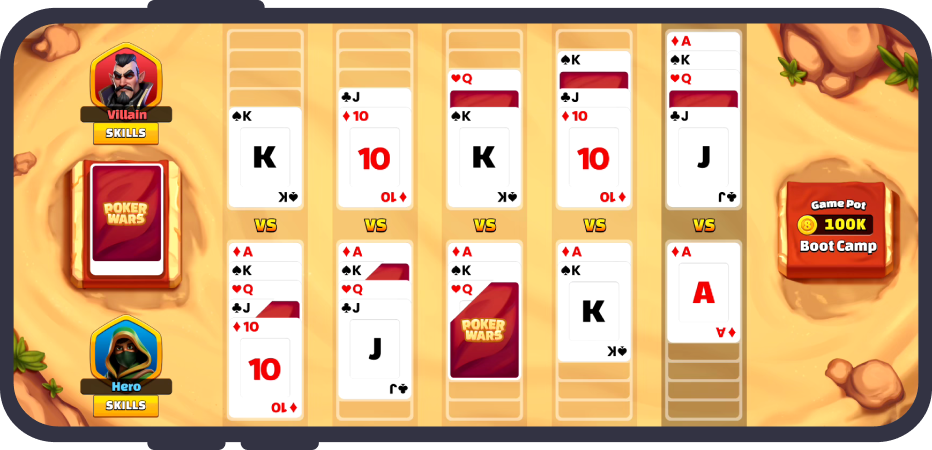
- The Visual Outcome: Transitioned the core table into an expansive, full-screen card arena aligned with the new casual art direction. The redesign expands the card display area, uses player profile states to show whose turn it is, and builds a clear visual hierarchy around the central game pot.
Old Version
New Version
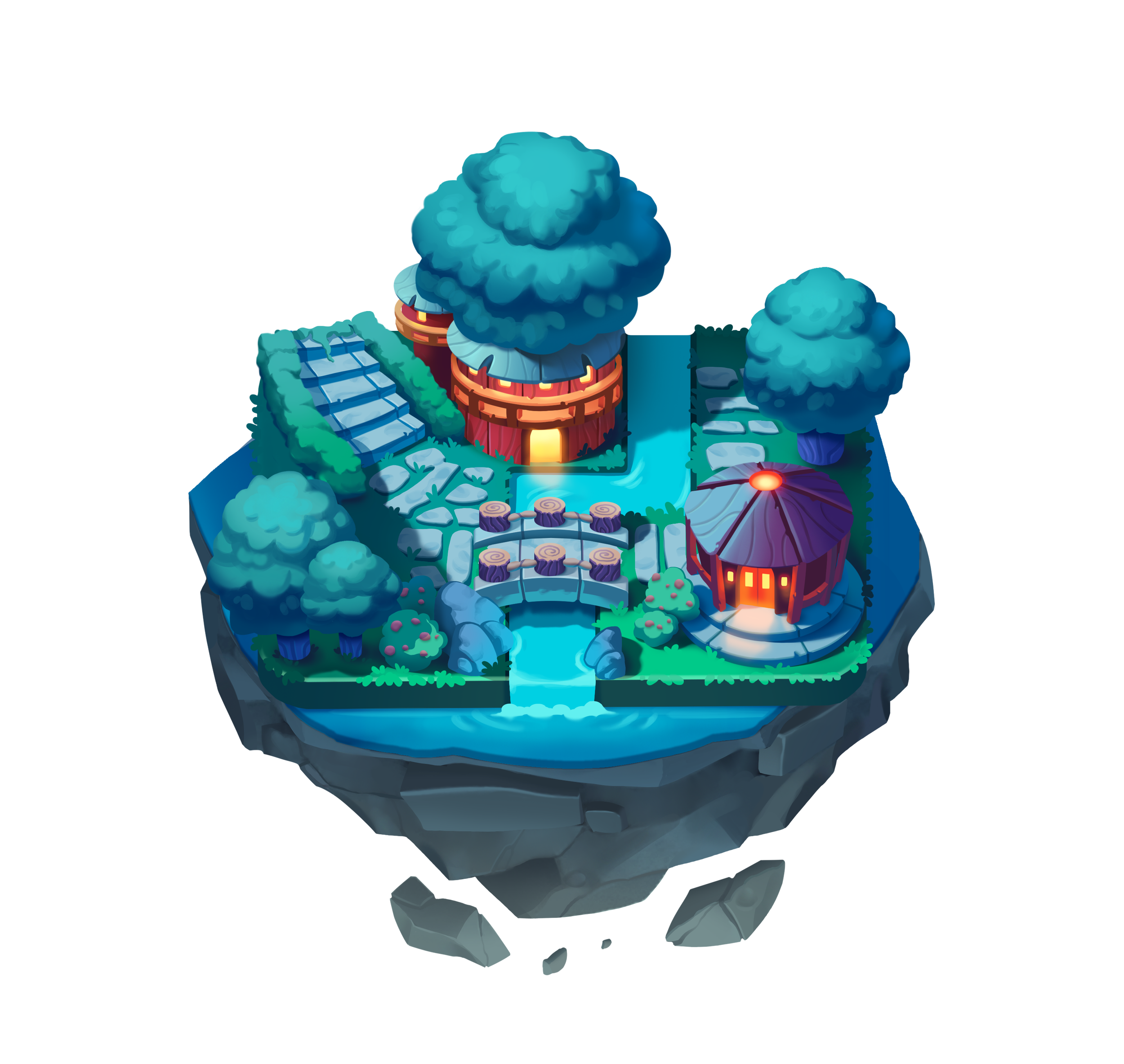
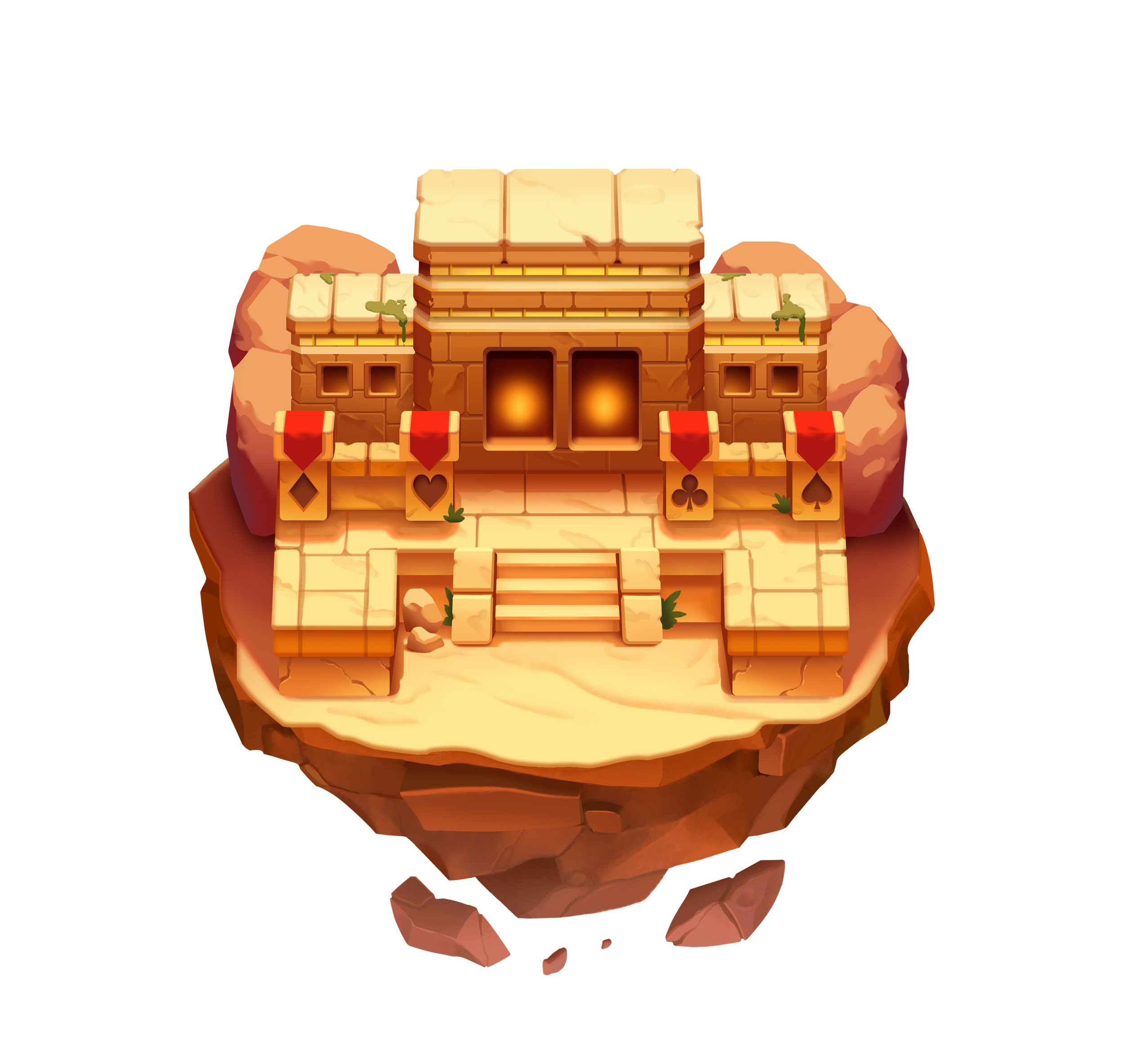
Cosmic Kingdoms (Casual Language & Storytelling)
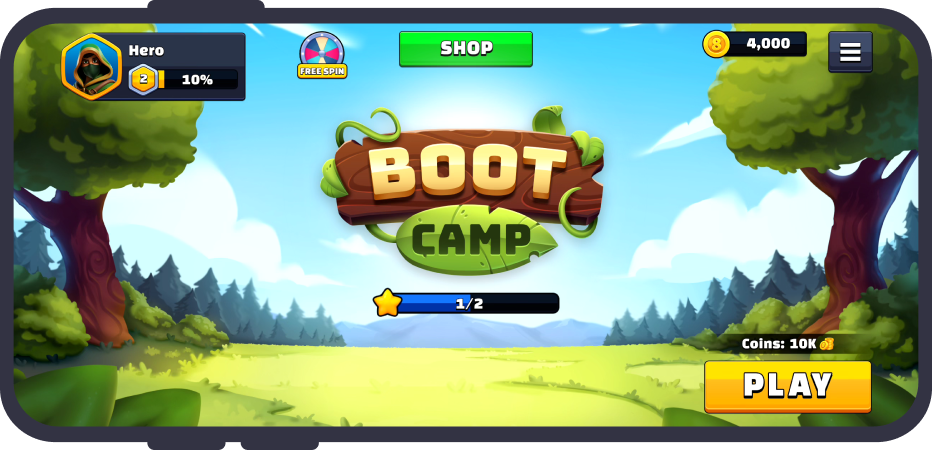
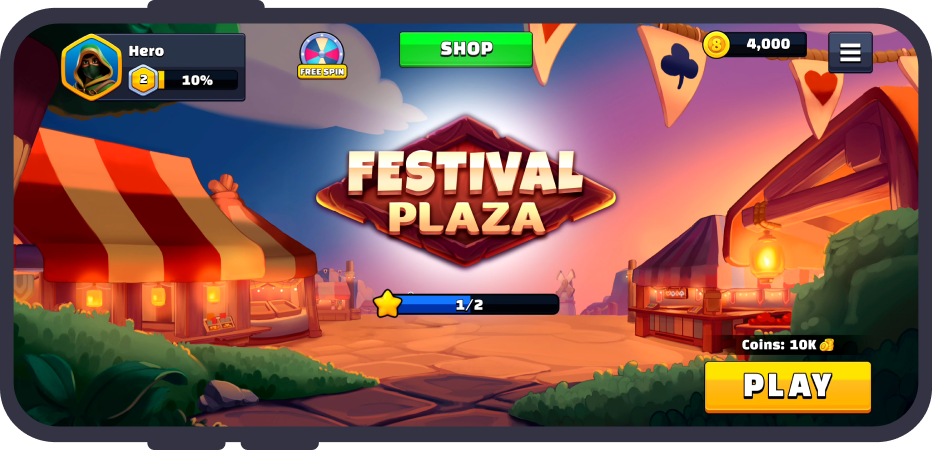
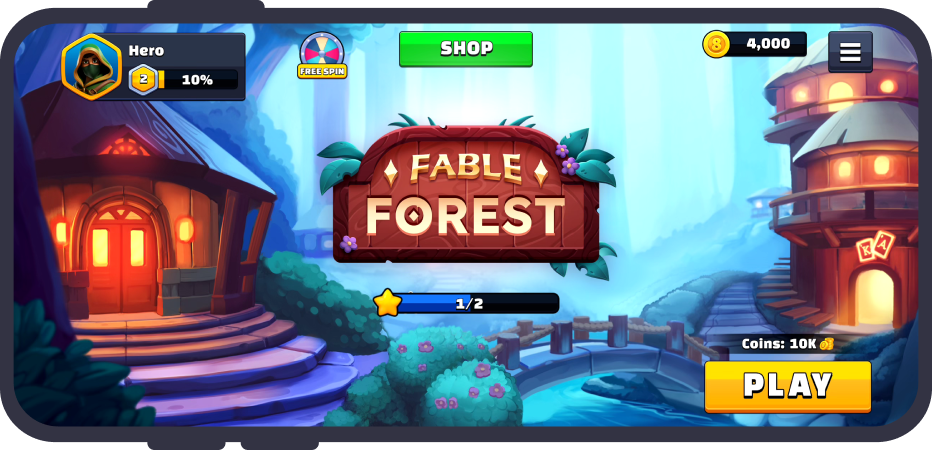
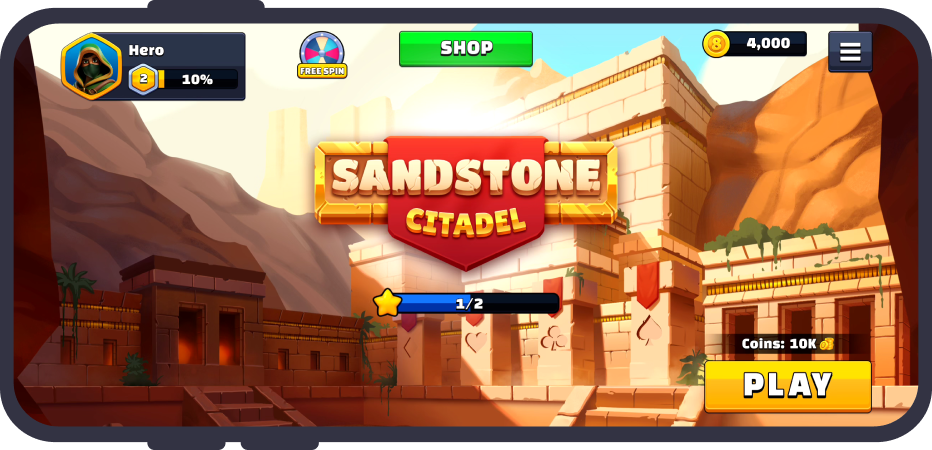
- The Metaphor: To lower the perceived complexity of the card mechanics, we replaced the generic, static card room with a "hero journey." This narrative layer gives a purely mechanical card game a clear goal.
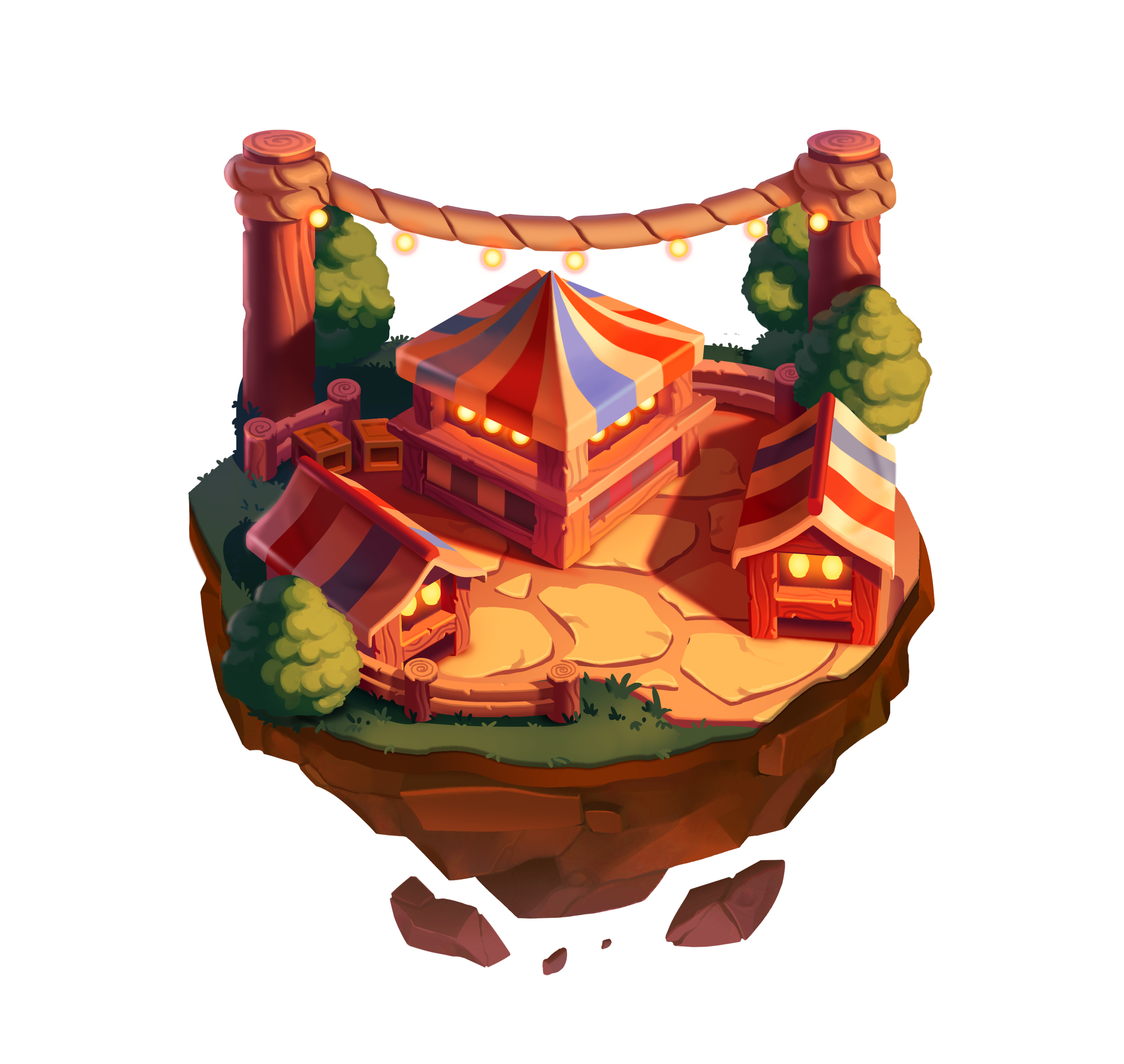
- The Art Direction: I provided the overarching art direction and conceptual guidelines, while the Concept Artist executed the final environmental visuals. The game environment was transformed into vibrant, stylized cosmic kingdoms that players discover, unlock, and progress through as they master the core gameplay loop.
- The Visual Evolution: Below are the final environmental designs representing the different progression tiers and thematic worlds within the universe.
Kingdom identity cards
In-game table environments
Concept art dioramas
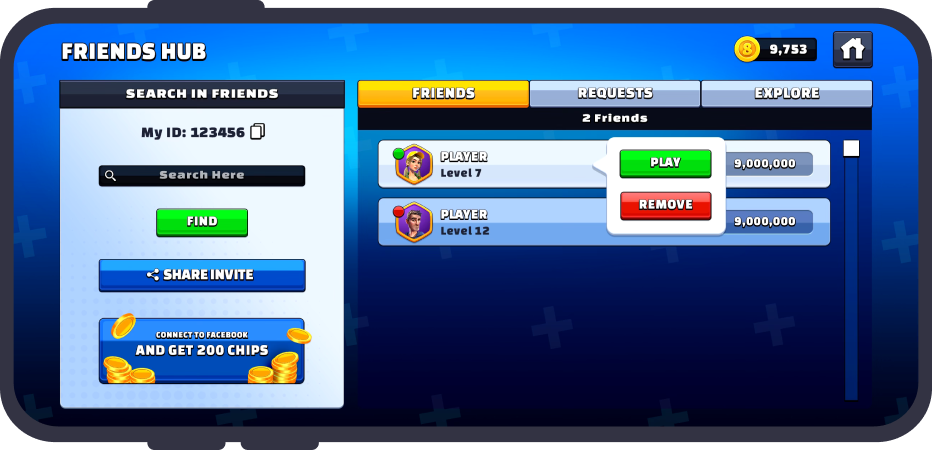
Social & Friends Hub
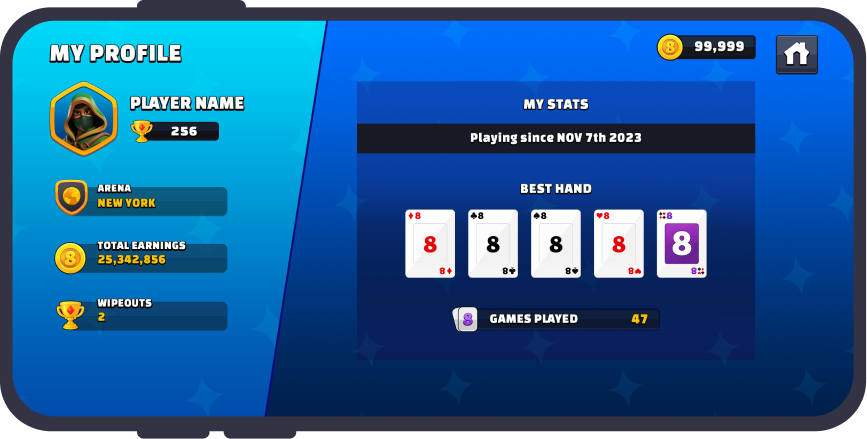
Outcome
Not measured.